
Secondhand electronics are consistently one of the most scammed categories on Facebook Marketplace, Gumtree, and eBay in Australia. Phones in particular — iPhones and Samsung flagships especially — show up in scam reports more than almost any other product type.
The reason is straightforward. Electronics are high value, easy to photograph, easy to post, and there is a liquid resale market that makes low prices feel plausible. A $600 iPhone listed for $380 does not look obviously fake. It just looks like someone who needs cash quickly.
The problem is that secondhand electronics carry a set of specific risks that do not apply to most other product categories. A second-hand couch is either in good condition or it is not. A second-hand phone might be stolen, locked, water damaged, repaired with non-genuine parts, or IMEI-blacklisted — and none of those things are visible from a listing photo.
The main risks with secondhand electronics
Stolen or IMEI-blacklisted devices
The most serious risk with secondhand phones specifically. Every mobile phone has an IMEI number — a unique identifier that networks use to track devices. When a phone is reported stolen in Australia, it can be added to a national blacklist. Once blacklisted, the phone may work on arrival but eventually stop connecting to any Australian network.
You have paid for a phone that is useless as a phone.
Sellers rarely disclose this. Many may not even know the device is listed — stolen phones sometimes pass through several hands before reaching a buyer.
What to do: Ask for the IMEI number before agreeing to buy. You can find it by dialling *#06# on the device or checking Settings. Then run it through the AMTA IMEI checker (amta.org.au/imei-checker) before you pay. A blacklisted result is a hard stop.
iCloud or Google account lock
An iPhone that has not been properly signed out of the previous owner's Apple ID will ask you to enter that ID when you set it up. If the seller cannot remove the lock before handover, you cannot use the phone. The same issue exists with Android devices that have Google account lock (also called Factory Reset Protection) enabled.
This is not always a scam — sometimes sellers genuinely forget to sign out. But a seller who cannot or will not remove the account lock after sale has effectively sold you a paperweight.
What to do: Before paying, confirm the seller can sign out of their account in front of you. On an iPhone: Settings → [Name] → Sign Out. On Android: Settings → Accounts → Remove account. If the seller says they will do it after you pay, or says you can sort it out yourself, walk away.
Misrepresented condition
"Barely used." "Like new." "Minor scratch that the camera doesn't pick up."
Photos are easy to stage. You will not see battery health, hidden screen damage behind a case, microphone or speaker issues, water damage indicators, or non-genuine replacement parts from a listing. Refurbished or repaired phones are not always disclosed, and non-genuine parts — especially batteries and screens — can affect performance and resale value.
What to do: Always inspect in person before paying if the value is significant. Check battery health (Settings → Battery → Battery Health on iPhone). Look at the screen at an angle in good light. Test the speakers, microphone, camera, Face ID or fingerprint reader. Ask whether any parts have been replaced — a reputable seller will tell you.

Fake payment confirmations — the seller's version of the scam
Buyers get scammed on electronics, but so do sellers.
A common pattern: a buyer contacts you, agrees to pay via bank transfer or PayID, then sends you a screenshot of a "payment confirmation" and asks you to hand over the device or post it. The payment has not actually been sent. The screenshot is edited or fabricated.
Once you have handed over or posted the item, you have nothing and no recourse.
What to do: Never hand over or post an item until the money has actually cleared in your account — not a screenshot, not a receipt, not a PayID confirmation message. Log into your bank app directly and confirm the transfer is there. For high-value items, meet in person and wait for the transfer to clear before you part with the device.
"Post only" and shipping pressure
Shipping-only listings are not automatically scams, but they do remove your ability to inspect the item before paying. Combined with the other risks above — locked device, wrong condition, IMEI blacklisted — "post only" means you have no way to check any of those things before money leaves your account.
The most common story: the seller is interstate, working away, or "can't do local pickup right now." Some of these are genuine. Many are not.
What to do: For any electronics purchase over about $200, strongly prefer in-person inspection and payment. If you do buy through postage, use a platform with buyer protection, pay by credit card where possible, and get the IMEI in writing before you transfer anything.
A checklist before you pay
These five checks take under ten minutes and stop the majority of electronics scams:
- IMEI check — get the number, run it on amta.org.au before you pay
- Account lock removed — seller signs out of Apple ID or Google account in front of you
- Battery health confirmed — check in settings, not just "it charges fine"
- In-person inspection — test speakers, microphone, screen, biometrics
- Money in account before handover — log into your bank, confirm the balance, then hand over the item
If a seller pushes back on any of these, that is information. A genuine seller with a genuine device has no reason to avoid basic checks.
When it feels off, it probably is
Most secondhand electronics transactions are fine. Most sellers are genuine. But the category attracts a disproportionate share of scam activity because the dollar values are high and the risks are invisible from the listing.
The deals that go wrong tend to share the same few features: price just low enough to feel like a bargain, a seller who wants to move quickly, a payment method you cannot reverse, and no opportunity to inspect before paying.
Slow down when you see that combination. A good deal will still be there after you have done the checks. A scam will often fall apart as soon as you ask for the IMEI.
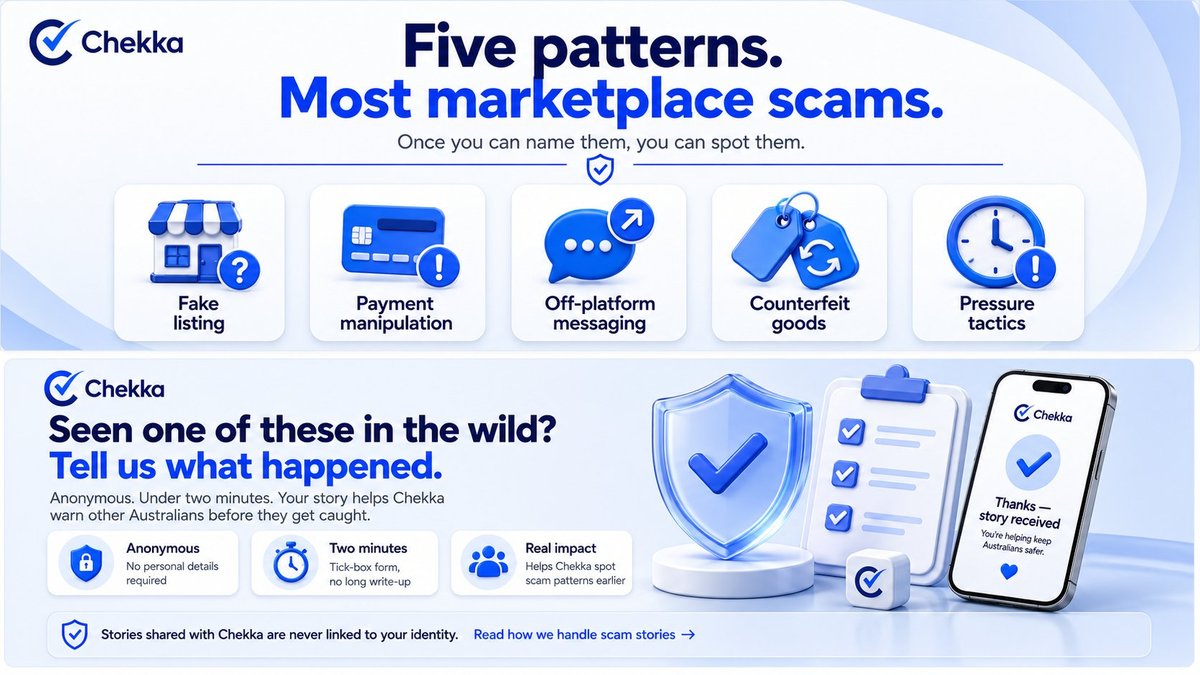
Bought a dud or spotted a scam? Chekka is collecting anonymous scam stories from Australian buyers and sellers. It takes under two minutes and your details are never linked to your story.